Quick contacts
-
924/1 Cummerata Mission, Los Angeles, USA, Inc - 4852
-
Monday: 13:00-18:00


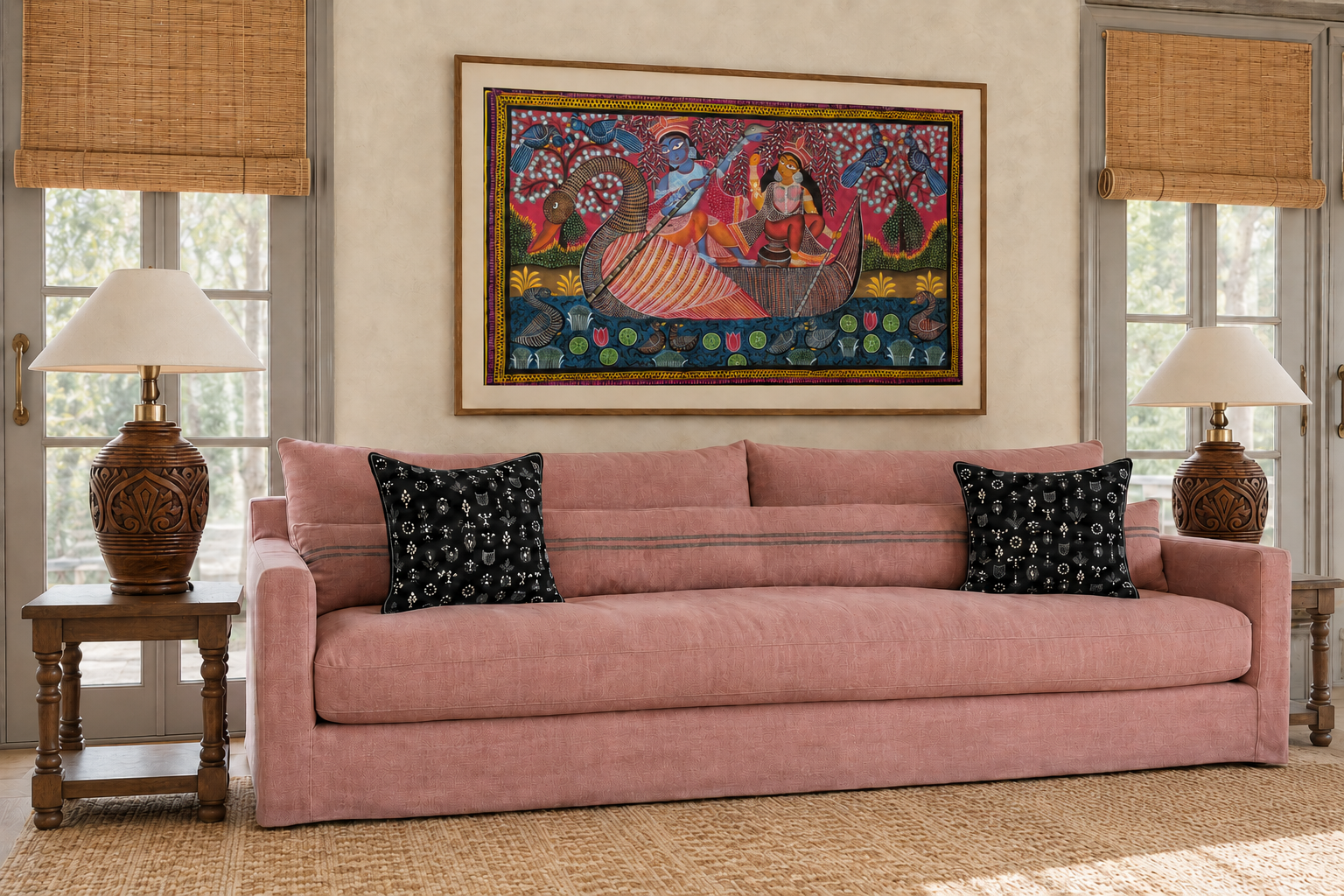
There was a time when we asked of an artwork: Do I love it?
Today, perhaps there is another question worth asking:
Where did it come from?
As our homes become increasingly filled with objects that can be replicated, reproduced and delivered across continents, knowing the origin of something has acquired a different significance. In art, that knowledge has a name—provenance.
For a collector, provenance may traditionally refer to an artwork’s documented history of ownership. But when we speak of a living folk tradition such as Bengal Pattachitra, provenance can begin much earlier.
It begins at the source.
It is about knowing the tradition from which the artwork emerged, the community that continues to practise it, the hands that painted it and the cultural vocabulary behind what appears on the surface.
In other words, provenance allows us to move from simply owning an artwork to knowing what we own.
The word handmade is everywhere today.
So are terms such as artisanal, heritage, traditional and folk-inspired. Beautiful as these descriptions may sound, they do not necessarily tell us where an object actually came from.
A painting may resemble a traditional Bengal Pattachitra without necessarily having emerged from the tradition itself.
And therein lies an important distinction.
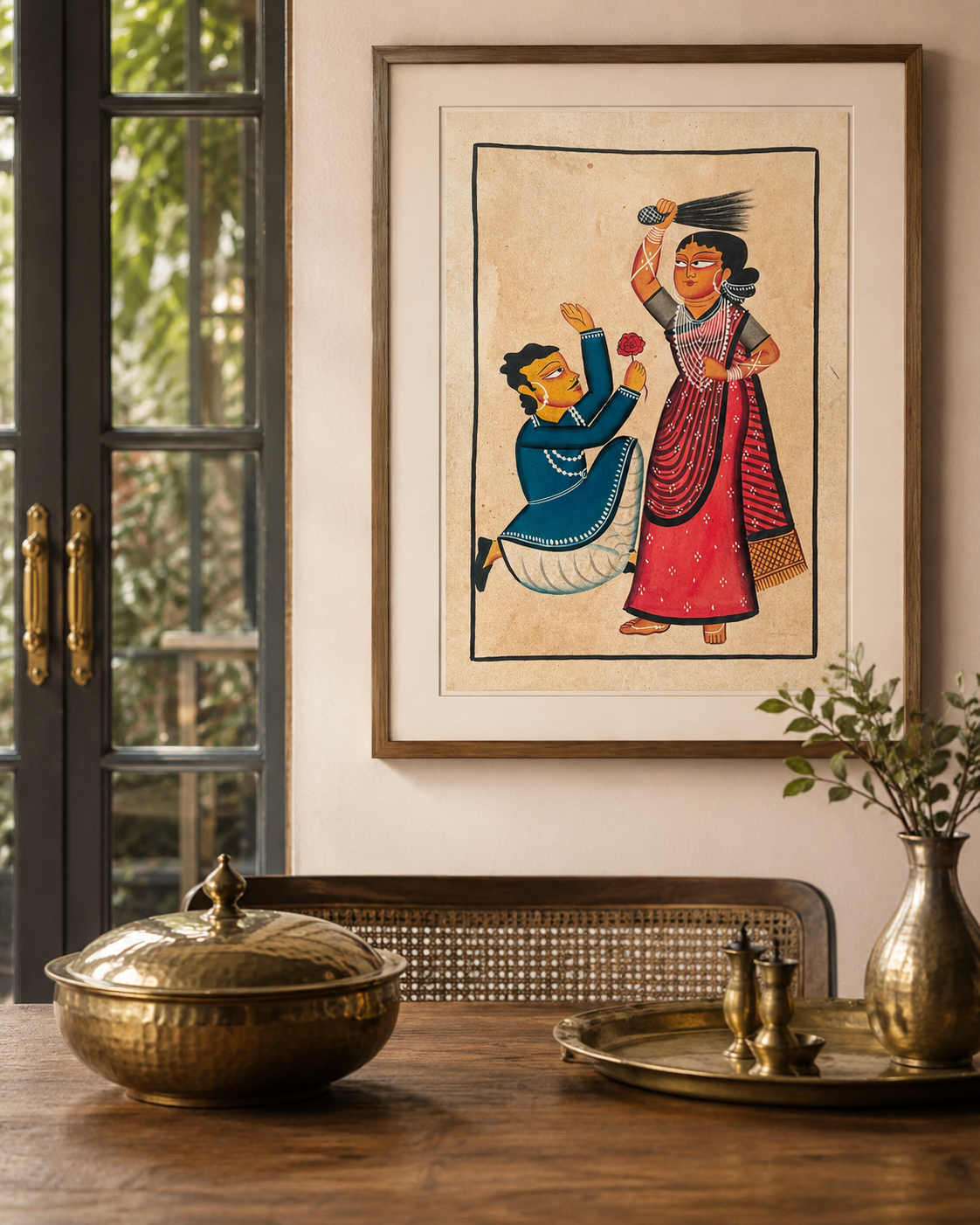
Inspiration can travel. Provenance traces the journey back.
For someone choosing an original work of folk art, knowing its source becomes part of understanding its authenticity.
Who created it?
Where was it created?
Does the artist belong to, or practise within, the artistic tradition being represented?
What techniques and visual language inform the work?
What does its imagery mean within the culture from which it originated?
These questions do not diminish the aesthetic pleasure of buying art. On the contrary, they add another dimension to it.
The Pattachitra tradition of Bengal is deeply connected with storytelling.
For generations, Bengal’s chitrakars or patuas have painted narratives that move between mythology, folklore, social observation and everyday life. Traditionally, painted scrolls could be unfurled sequentially while the patua narrated or sang the story depicted within them.
The painting, therefore, was never merely an image.
It was part picture, part narrative and part oral tradition.
Over time, formats and subjects have evolved. Yet the distinctive visual vocabulary continues to carry traces of the communities and cultural environments from which the tradition emerged.
This is precisely why provenance matters.
Without its context, a Pattachitra can simply become an attractive “Indian folk painting.”
With its provenance understood, it becomes something considerably richer: a piece of a continuing cultural narrative.
At Kalkatte Vaali, our relationship with craft has always encouraged us to look beyond the finished object.
We are interested in the journey before the object reaches us.
When we source Bengal Pattachitra, knowing where the work comes from and remaining connected with practising artisan communities is important to us. It allows us to speak about an artwork not merely through its colour, composition or decorative appeal, but through its origin and the hands behind it.
For us, this is what provenance represents.
Authenticity begins at the source.
It is not about making handmade art uniform or flawless. Quite the opposite.
A work created by hand may carry minute variations in line, pigment or execution. These are not necessarily imperfections to be corrected. They can be evidence of the human process behind the piece.
In a marketplace accustomed to identical reproductions, that individuality becomes increasingly meaningful.
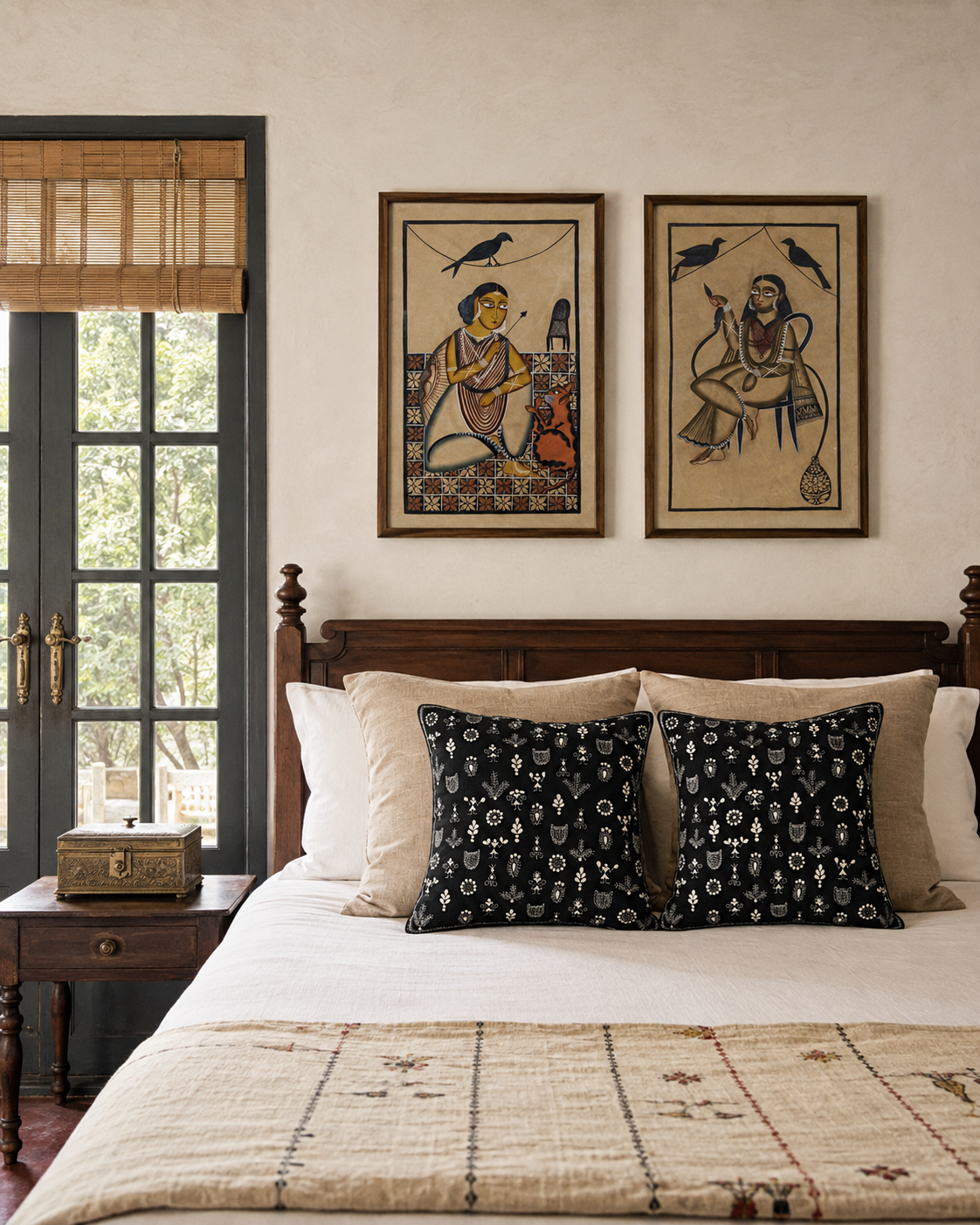
Interestingly, the more contemporary our homes become, the more compelling objects with a discernible past can feel within them.
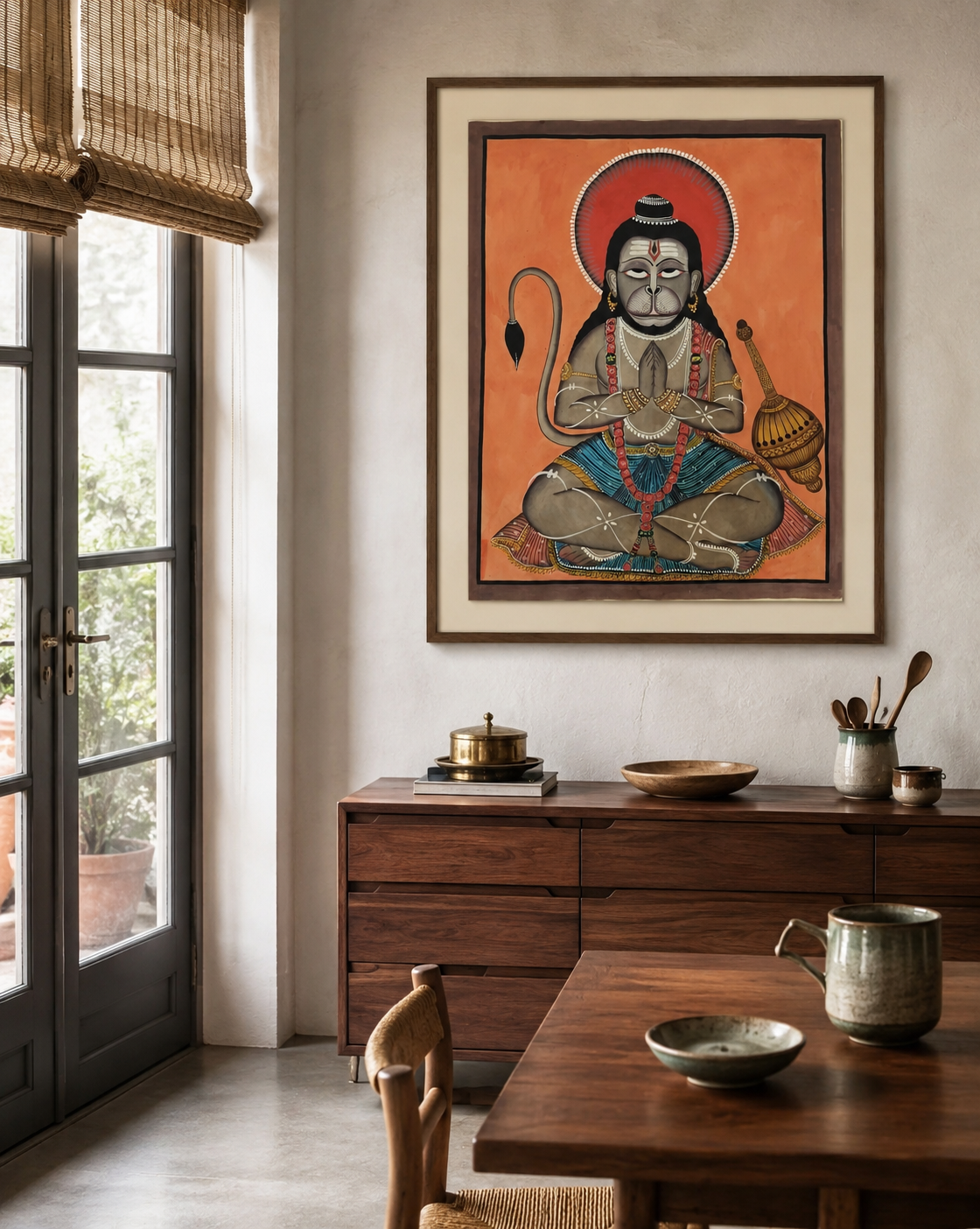
A Bengal Pattachitra does not necessarily require a traditionally Indian interior.
Placed against a quiet lime-plastered wall, above a restrained console, within a contemporary study or alongside modern furniture, an original folk artwork can create an unexpected visual tension.
The room provides the space.
The artwork provides the story.
For interior designers, this offers an opportunity to move beyond decorating with objects chosen purely by colour, scale or trend.
A work with provenance introduces another layer into a space—conversation.
A guest may first notice the painting because of its visual character. Then comes the question:
“What is this?”
And suddenly the owner has a story to tell.
About Bengal. About its patuas. About the imagery. About how the artwork was made and where it came from.
That is when art stops filling a wall and begins contributing to the identity of a home.
When an artwork crosses geography, provenance assumes another significance.
A Bengal Pattachitra displayed in London, New York, Singapore, Melbourne or elsewhere may be thousands of kilometres removed from the landscape in which its artistic vocabulary developed.
Yet its story can travel with it.
Knowing the source prevents traditional art from becoming anonymous “ethnic décor.”
It allows the collector to understand that the work belongs to a specific artistic tradition, practised by real communities and shaped by a particular cultural history.
And perhaps this is one of the most respectful ways to bring indigenous and folk art into contemporary global homes:
not by separating the beautiful object from its origins, but by allowing its origins to remain part of the object.
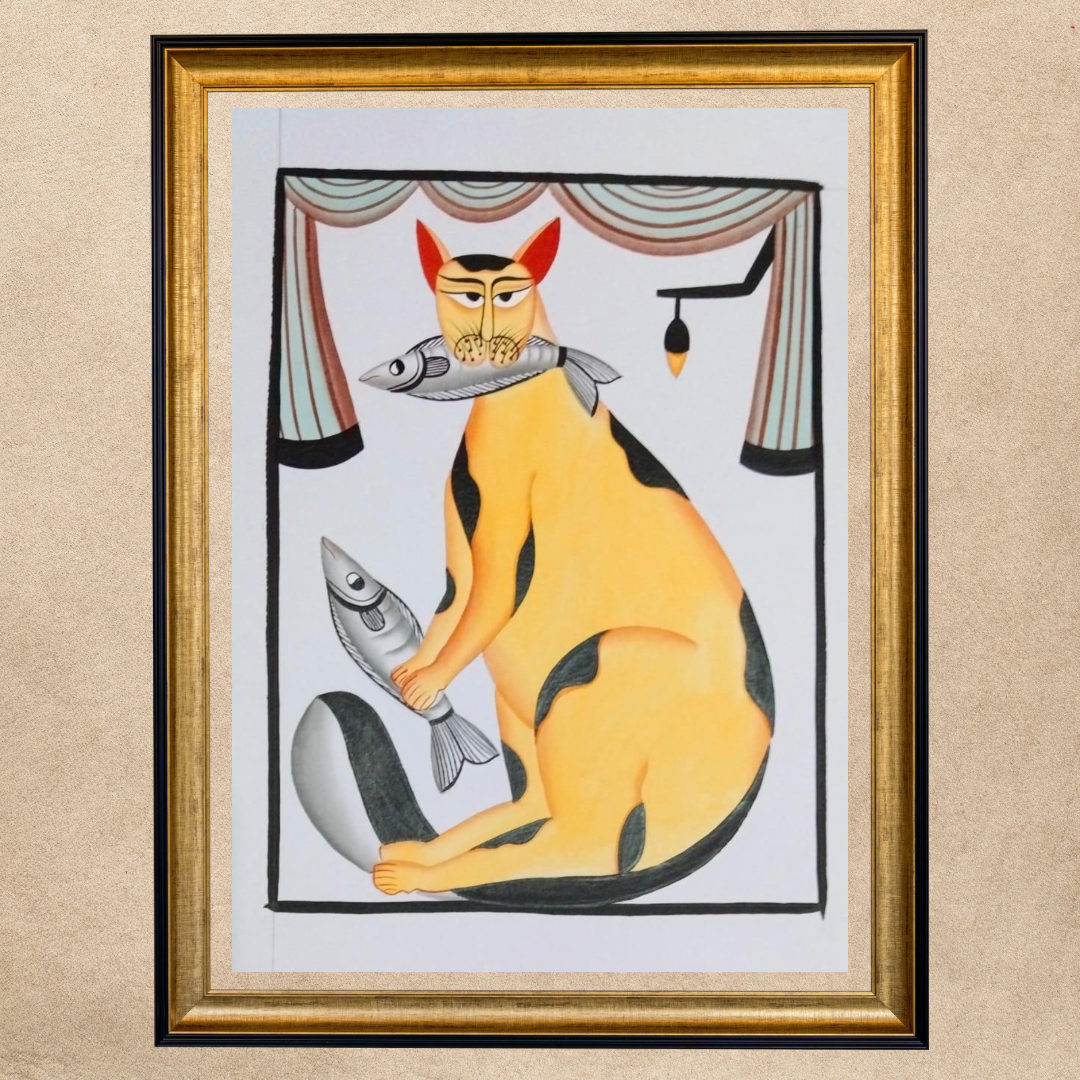
There is also a subtle difference between buying something to decorate a wall and beginning to collect art.
Decoration often starts with the room.
Collecting frequently starts with curiosity.
One artwork leads to questions. Questions lead to understanding. Understanding gradually develops into discernment.
You begin noticing differences in subjects, compositions, techniques and individual artistic expressions. You begin asking about the maker. You begin caring about where a work came from.
And provenance naturally becomes part of that journey.
It need not make collecting intimidating or inaccessible.
Quite the opposite.
It gives us a wonderfully simple place to begin:
Know the art. Know the artist. Know the source.
Luxury has traditionally been associated with rarity, material and price.
But our understanding of luxury is changing.
Increasingly, we value things that cannot easily be replicated: time, craftsmanship, individuality, human connection and a sense of origin.
An artwork whose source you know carries something a reproduction cannot completely recreate.
It carries a relationship to a place.
To a tradition.
To a maker.
And ultimately, to a story that existed long before the artwork entered our home.
Perhaps that is why provenance matters.
Because when we know where our art comes from, we do not merely know what hangs on our wall.
We know whose story we have chosen to carry forward.
Kalkatte Vaali
Blending the contemporary with the indigenous.
Provenance: Because authenticity begins at the source.


Nisanth (Mumbai) purchase
Plaids- Blue- Kantha cushion cover | 14″x26″| Rectangular | Blue colour30 minutes ago