Quick contacts
-
924/1 Cummerata Mission, Los Angeles, USA, Inc - 4852
-
Monday: 13:00-18:00


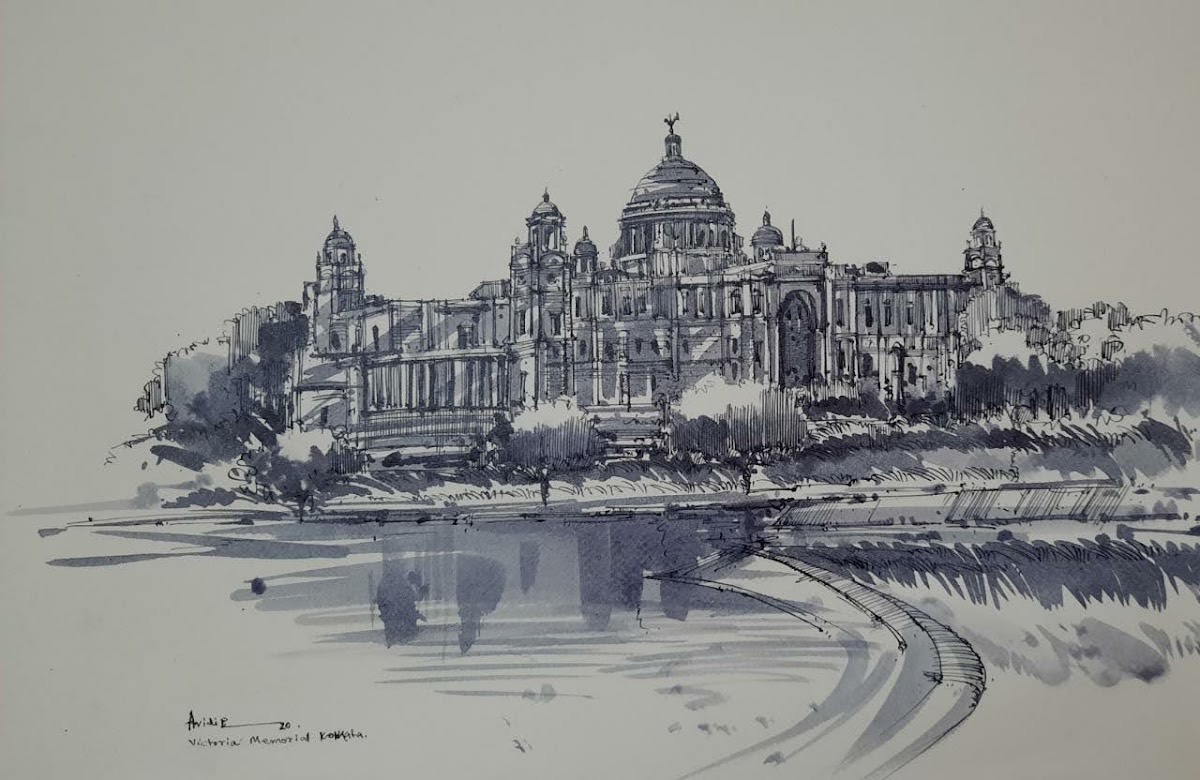
Calcutta’s British-era architecture is more than a collection of colonial buildings frozen in time. It is a layered narrative—of ambition and adaptation, authority and intimacy—woven quietly into the city’s everyday life. Even today, these structures stand not as relics, but as living witnesses to a city shaped by history, climate, culture, and human presence.
From the imposing neoclassical columns of the Writers’ Building to the restrained elegance of St. John’s Church, and from the red-brick grandeur of Dalhousie Square to the stately façade of the Calcutta High Court, British architecture in Calcutta reflects a meeting of worlds. European design principles arrived with colonial intent, but over time, they softened—responding to tropical light, monsoon rains, and the rhythms of Indian life.
The Sensibility of Old Calcutta
What defines Old Calcutta is not scale alone, but sensibility. Wide verandahs provide shade and pause. Arched windows open into cool corridors. Facades wear the patina of decades—marked by moss, rain, soot, and memory. Bougainvillea creeps along balconies, while time leaves its mark in peeling paint and softened edges.
These buildings were never isolated monuments. They housed offices, courts, churches, traders, clerks, and citizens. They absorbed the sounds of trams, footsteps, protests, and everyday conversations. Architecture here is not static—it breathes, ages, and remembers.
Urban Sketching as Emotional Documentation
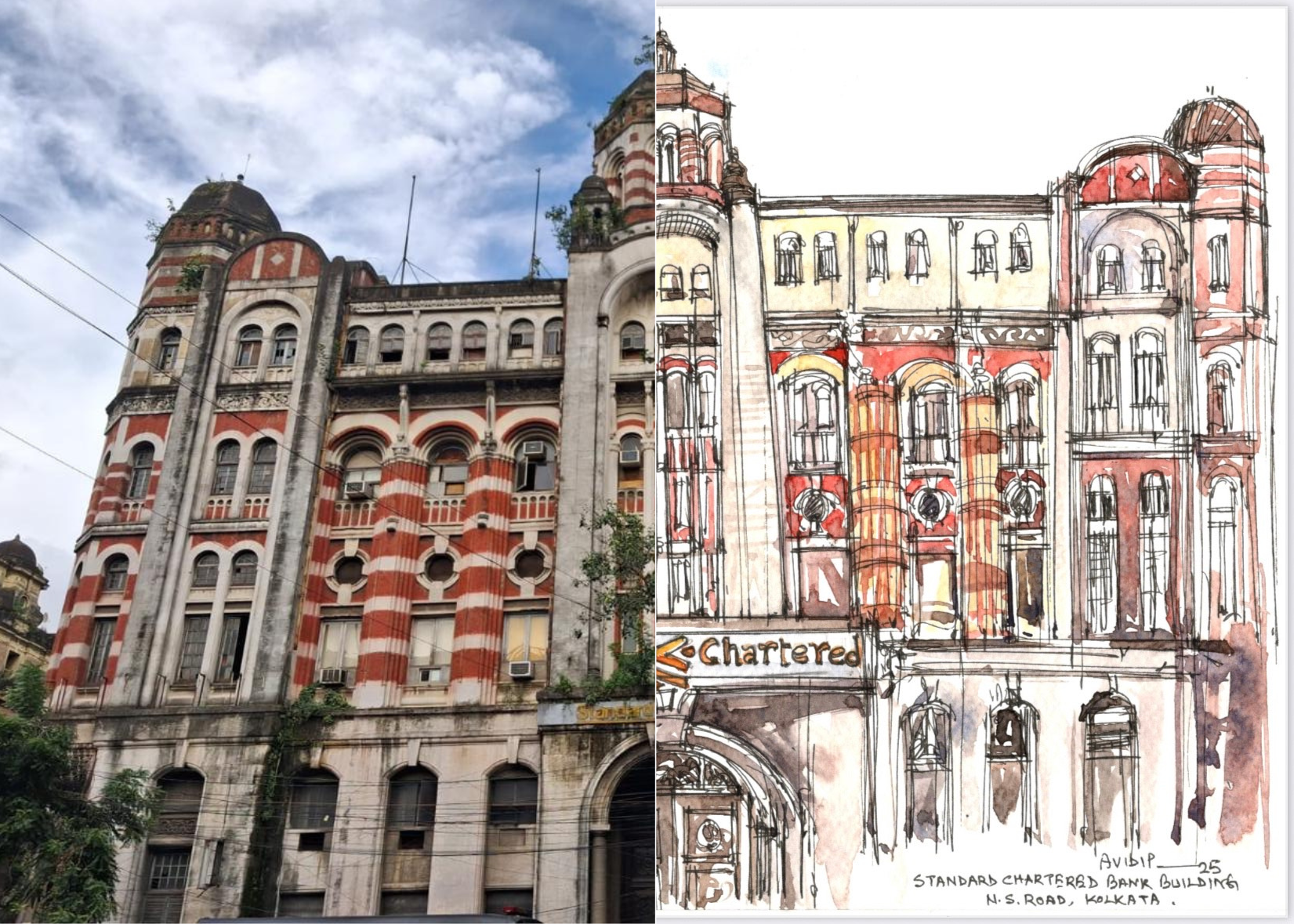
Urban sketching offers a powerful way to engage with this layered history. Unlike photography or technical architectural drawings, urban sketching embraces imperfection. Loose lines, uneven perspectives, and expressive washes allow the artist to capture not just form, but feeling.
Through urban sketches, stone and mortar are translated into mood. Shadows hint at time of day. Ink lines follow cracks, cornices, and weathered details. Watercolour bleeds echo monsoon skies and humid afternoons. What emerges is not a precise record, but an emotional truth—how a place feels when one stands before it.
Urban sketching turns observation into dialogue. The artist responds to the building, to its surroundings, to its silence and noise. In doing so, the sketch becomes a bridge between past and present.
More Than Structures, Living Stories
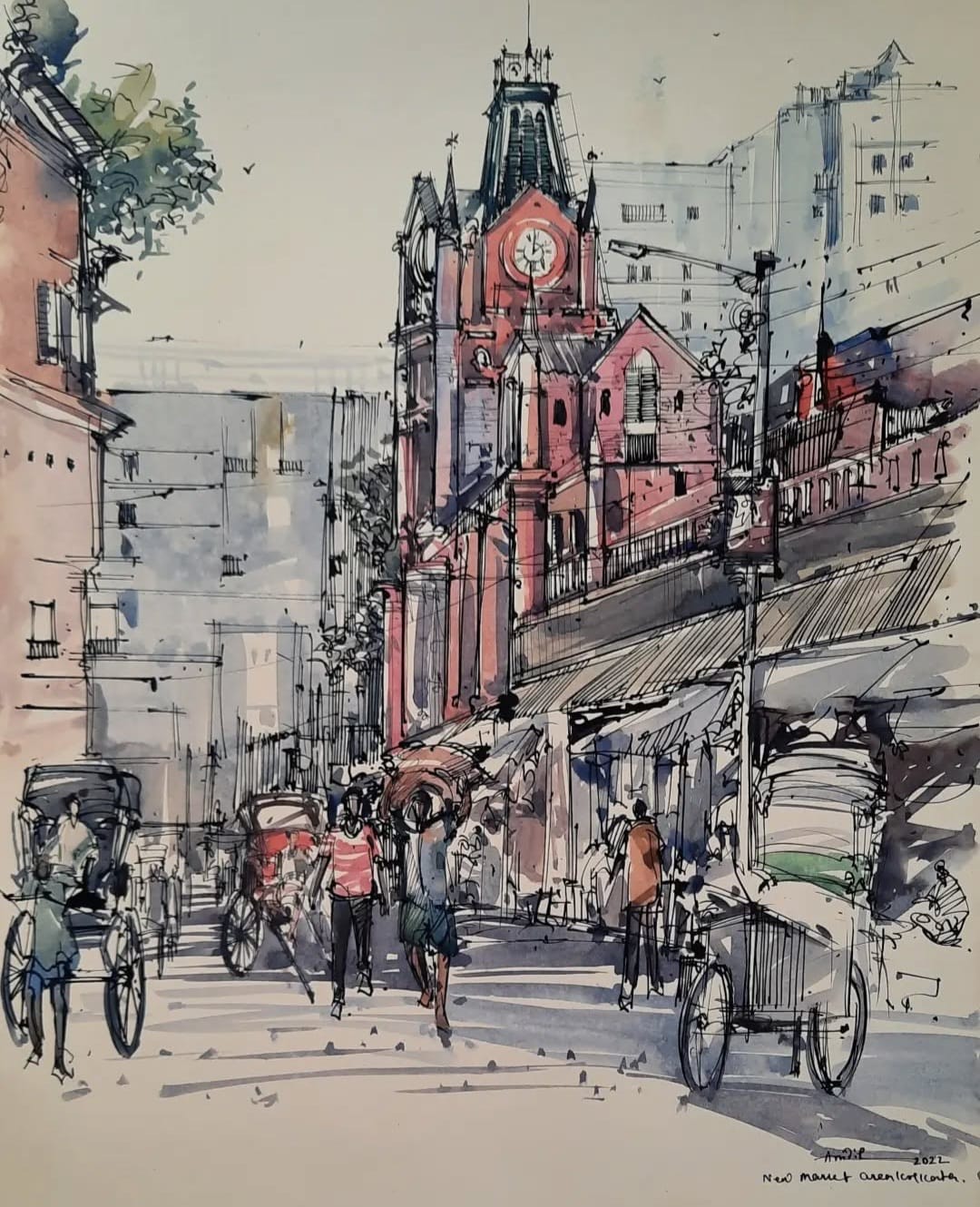
British-era buildings in Calcutta are often described in terms of style—neoclassical, Gothic Revival, Indo-Saracenic. Yet their deeper value lies in their lived experience. They have adapted to a city that refused to remain colonial, absorbing Indian customs, climate, and culture into their very walls.
Urban sketching reminds us of this humanity. It resists perfection and embraces memory. It allows heritage to feel intimate rather than distant, emotional rather than academic.
In capturing Old Calcutta through sketchbooks instead of blueprints, we are reminded that architecture is not merely about design—it is about people, time, and the quiet beauty of endurance.
Now you can get the city scapes of your own city commissioned by us. Write to us @ care@kalkattevaal.in or visit us @ www.kalkattevaali.in

It is a long established fact that a reader will be distracted




Nisanth (Mumbai) purchase
Plaids- Blue- Kantha cushion cover | 14″x26″| Rectangular | Blue colour30 minutes ago



Comments(0)