Quick contacts
-
924/1 Cummerata Mission, Los Angeles, USA, Inc - 4852
-
Monday: 13:00-18:00


Introduction: The Craft Behind Every Brushstroke
Pattachitra is one of India’s most celebrated folk art traditions, known for its vivid colors, intricate patterns, and storytelling depth. While the finished artwork appears elegant and effortless, the process behind creating it requires patience, discipline, and generations of inherited knowledge.
Understanding how Pattachitra is made allows us to appreciate the dedication behind every piece. Each painting is the result of careful preparation, natural materials, and hours of skilled handwork that bring cultural narratives to life.
From preparing the canvas to applying natural pigments and finishing delicate details, the process reflects the beauty of traditional craftsmanship.
Preparing the Canvas
The creation of a Pattachitra painting begins with preparing the surface. Traditionally, artisans paint on cloth, which forms the base for this handmade scroll painting technique.
To prepare the canvas, a piece of cotton cloth is coated with a mixture made from chalk powder and natural gum. This coating strengthens the fabric and creates a smooth painting surface.
Once the mixture dries, the cloth is polished using stones or shells. This process gives the surface a slightly leathery texture that allows the paint to adhere properly.
The result is a durable and flexible canvas that can support the intricate detailing characteristic of Pattachitra.
Creating Natural Colors
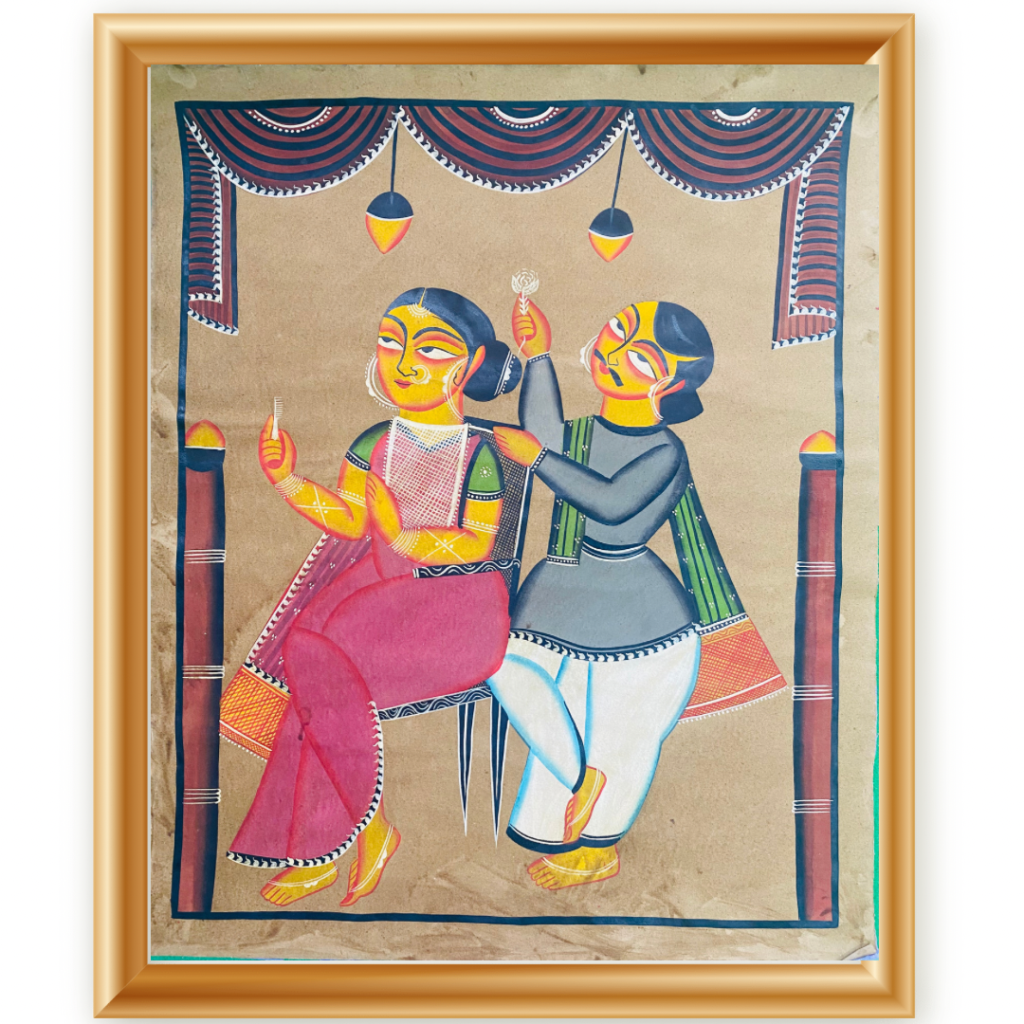
One of the most fascinating aspects of Pattachitra art is the use of natural dyes in Indian art traditions. Unlike modern synthetic paints, traditional Pattachitra colors are derived from natural sources.
Artisans historically created pigments from materials such as:
• White from powdered conch shells
• Black from soot or burnt coconut shells
• Red from natural mineral earth pigments
• Yellow from turmeric or plant extracts
• Green from leaves and natural plant dyes
These pigments are carefully mixed with natural binders to create smooth, long lasting colors.
The use of natural dyes in Indian art not only preserves traditional methods but also reflects the sustainable philosophy behind many folk art techniques in India.
Sketching the Design
Once the canvas is ready, the artist begins by sketching the outline of the design.
This stage requires careful planning because Pattachitra paintings often depict detailed narratives from mythology, folklore, and cultural traditions. Artists draw the outlines freehand using fine brushes.
The compositions are typically structured with balanced elements, decorative borders, and expressive figures. Symmetry and proportion are essential, as they give the artwork its visual harmony.
The outlining stage forms the foundation of the entire painting.
Filling the Colors
After the outline is complete, the artist begins applying colors. Unlike modern painting styles that rely on shading and gradients, traditional Pattachitra uses flat areas of bold color.
Each section of the artwork is carefully filled with natural pigments. Artists apply colors layer by layer, allowing each one to dry before moving on to the next.
This stage requires precision because the clean separation of colors contributes to the clarity and vibrancy of the final piece.
The process may take several days depending on the complexity of the design.
Intricate Detailing and Ornamentation
Once the primary colors are applied, the artist begins the most delicate stage of the process, detailing.
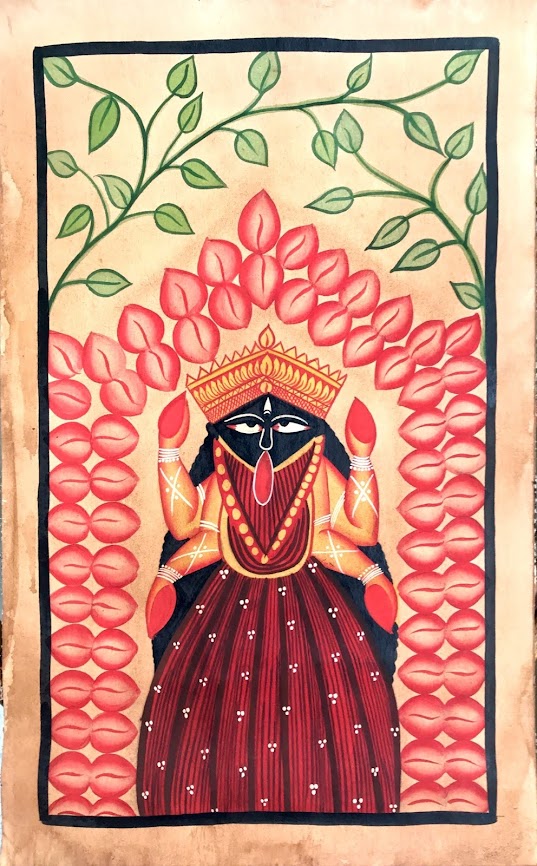
Fine brushes are used to add decorative patterns, textures, and borders around the main elements of the painting. These intricate details bring the artwork to life.
Common decorative features include:
• Floral and vine patterns
• Elaborate border designs
• Stylized clothing and jewelry on figures
• Repeating motifs that fill the background
This stage demonstrates the mastery of folk art techniques in India. The patience required for such detailed work reflects the dedication of the artisan.
The Final Outline
After the detailing is complete, the artist adds a final outline using black pigment.
This step sharpens the forms and enhances the contrast between colors. The bold black lines give Pattachitra its distinctive visual identity and make the figures appear more expressive.
The final outlining stage completes the artwork and brings cohesion to the entire composition.
The Beauty of Handmade Scroll Painting
What makes Pattachitra truly special is the human effort behind every step of the process. Each piece is created entirely by hand, using methods that have been passed down through generations.
Unlike printed reproductions, handmade scroll painting carries subtle variations in brushwork, color intensity, and texture. These variations give each artwork its own character.
Because of this, no two Pattachitra paintings are ever exactly the same.
Why Traditional Techniques Still Matter
In an era of mass production, traditional art forms like Pattachitra remind us of the value of slow craftsmanship.
The use of natural dyes in Indian art, the careful preparation of materials, and the patience required for intricate detailing all reflect a deep respect for artistic tradition.
These techniques also preserve cultural heritage and sustain artisan communities who continue to practice these skills today.
For collectors and art enthusiasts, owning a Pattachitra painting means supporting a living tradition.
Bringing Pattachitra into Contemporary Spaces
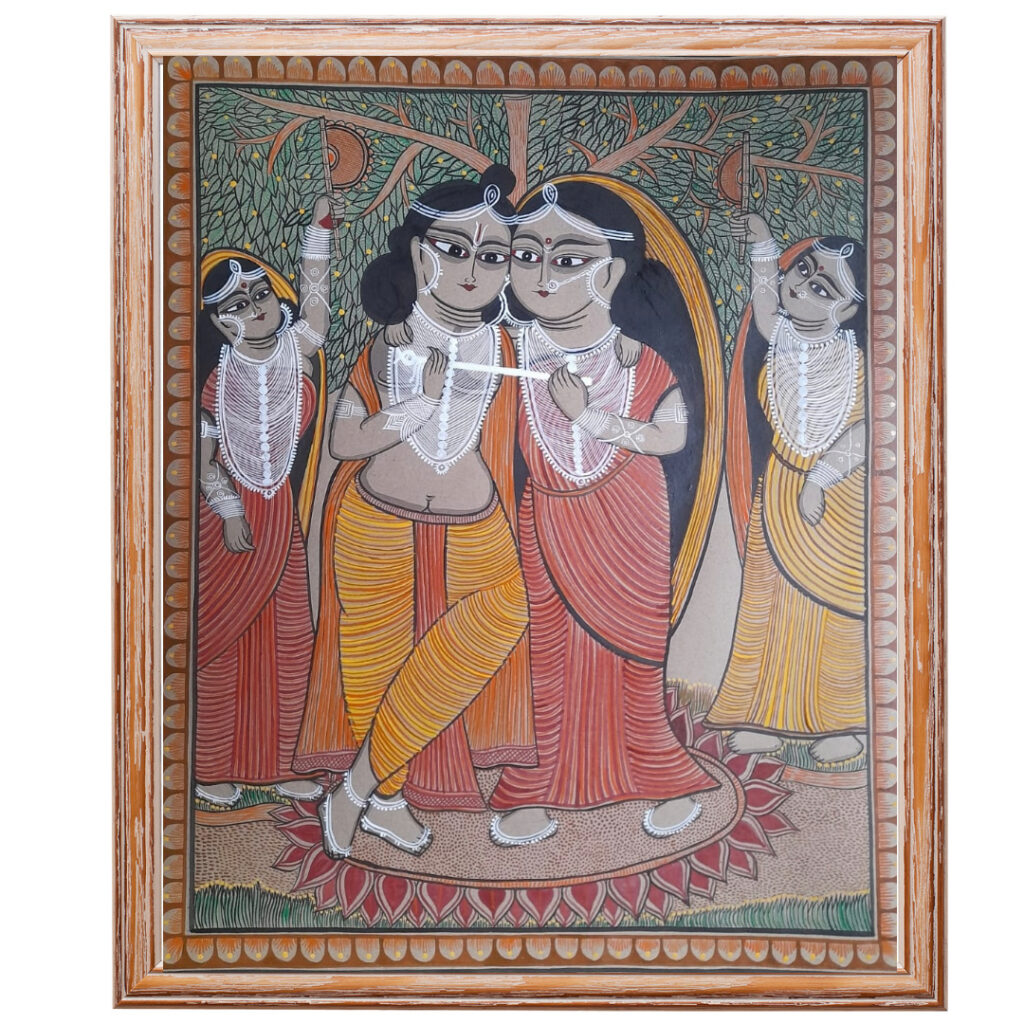
Today, Pattachitra artworks are appreciated not only for their cultural value but also for their aesthetic beauty. These paintings bring color, storytelling, and craftsmanship into modern interiors.
Whether displayed in living spaces, work environments, or galleries, Pattachitra adds character and depth to a room.
For those who appreciate heritage art that carries meaning, these handcrafted works offer both artistic elegance and cultural connection.
Preserving the Legacy of Artisan Craft
Behind every Pattachitra painting is an artisan who has spent years mastering this traditional art form.
Supporting handmade scroll painting helps preserve these skills and ensures that the knowledge continues to pass from one generation to the next.
Choosing authentic artisan creations also encourages sustainable and thoughtful consumption.
Conclusion: A Tradition Painted by Hand
The process of how Pattachitra is made reveals the remarkable dedication behind this art form. From preparing natural pigments to completing intricate detailing, each stage reflects centuries of artistic knowledge.
These paintings are not simply decorative pieces. They are expressions of cultural identity, patience, and skill.
When we look at a finished Pattachitra artwork, we are not just seeing colors and shapes. We are witnessing the result of a living tradition that continues to evolve while honoring its roots.
And that is what makes Pattachitra truly timeless.

It is a long established fact that a reader will be distracted



Nisanth (Mumbai) purchase
Plaids- Blue- Kantha cushion cover | 14″x26″| Rectangular | Blue colour30 minutes ago


Comments(0)