Quick contacts
-
924/1 Cummerata Mission, Los Angeles, USA, Inc - 4852
-
Monday: 13:00-18:00


Introduction: Stories Hidden Within Every Motif
Pattachitra is not just a painting style, it is a storytelling tradition rooted in centuries of cultural expression. Every line, pattern, and figure in these artworks carries meaning. From mythological scenes to decorative borders, the motifs used in Pattachitra paintings reflect deep symbolic connections to nature, spirituality, and folklore.
Understanding Pattachitra motifs meaning allows us to appreciate these paintings beyond their visual beauty. Each motif acts as a visual language through which artists communicate stories, beliefs, and cultural values that have been passed down through generations.
In Bengal folk painting traditions, these motifs are carefully chosen to convey narrative depth and symbolic significance.
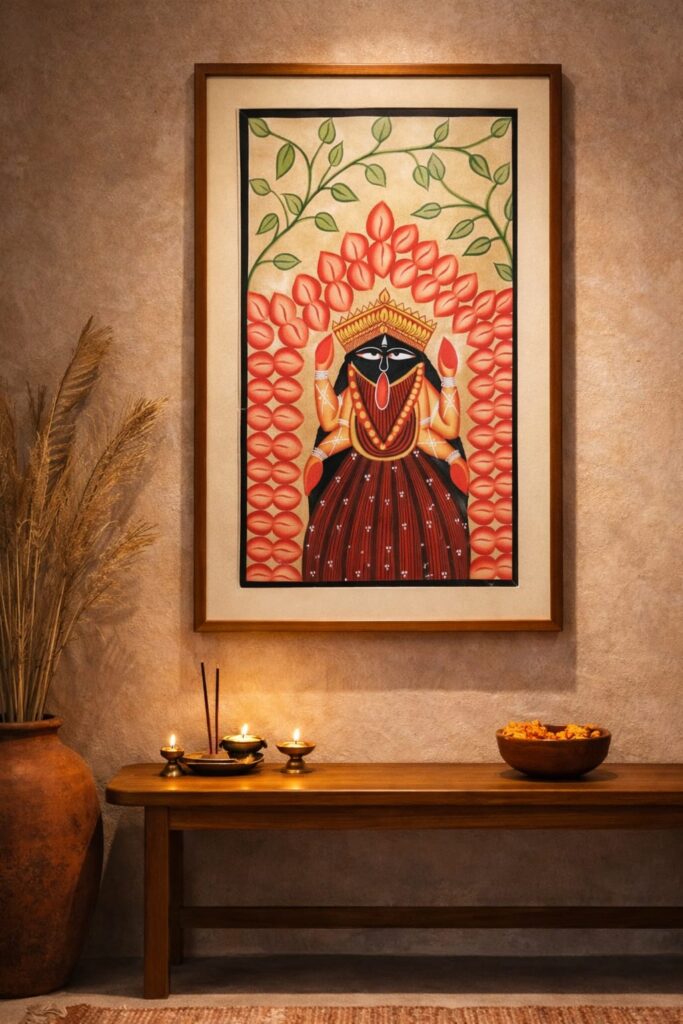
The Role of Symbolism in Indian Folk Art
Across many forms of traditional Indian art, symbolism plays an important role. Artists often use recurring images to represent universal ideas such as prosperity, purity, protection, or divine presence.
This symbolism in Indian folk art helps viewers interpret the story being told. Instead of relying only on written narratives, visual symbols guide the viewer through the artwork.
In Pattachitra paintings, motifs are not randomly placed. Each element is part of a carefully composed narrative where figures, plants, animals, and decorative patterns contribute to the overall meaning.
The Lotus: A Symbol of Purity and Creation
One of the most common motifs seen in traditional Indian art symbols is the lotus flower.
The lotus represents purity, spiritual awakening, and divine beauty. In Hindu mythology, the lotus is associated with many deities, including Lakshmi and Brahma. It symbolizes the idea that beauty and enlightenment can emerge from even the most ordinary surroundings.
In Pattachitra paintings, the lotus often appears as:
• A decorative border element
• A seat for deities
• A repeating floral pattern that frames the artwork
Its presence reinforces themes of spirituality and renewal.
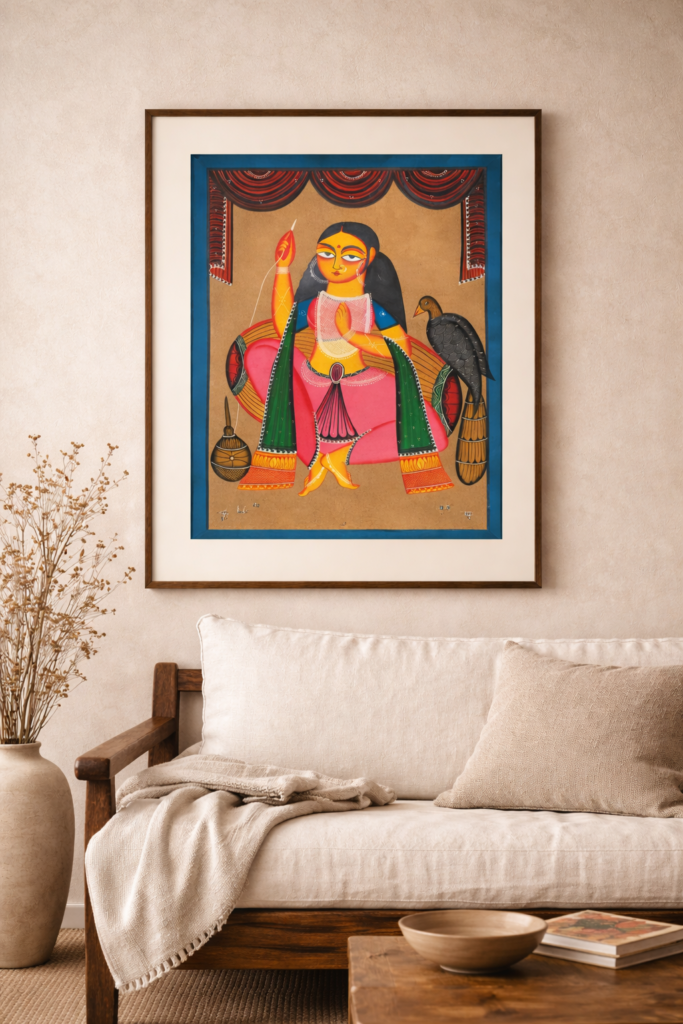
The Peacock: Grace, Beauty, and Divine Connection
Another frequently seen motif in Bengal folk painting motifs is the peacock. Known for its vibrant feathers and graceful presence, the peacock symbolizes beauty, prosperity, and divine energy.
In many traditional artworks, the peacock is associated with:
• Royal elegance
• Nature’s harmony
• Divine vehicles of certain deities
Artists often depict the peacock with elaborate detailing, making it one of the most visually striking elements within Pattachitra compositions.
Trees and Vines: Symbols of Life and Continuity
Nature plays a central role in traditional Indian art. Trees, vines, and floral patterns are common motifs that symbolize growth, life, and continuity.
In Pattachitra paintings, these elements are often woven around figures or used to fill the background with rhythmic patterns. The tree of life motif is particularly meaningful, representing the interconnectedness of all living beings.
These organic patterns also help create balance and harmony within the composition.
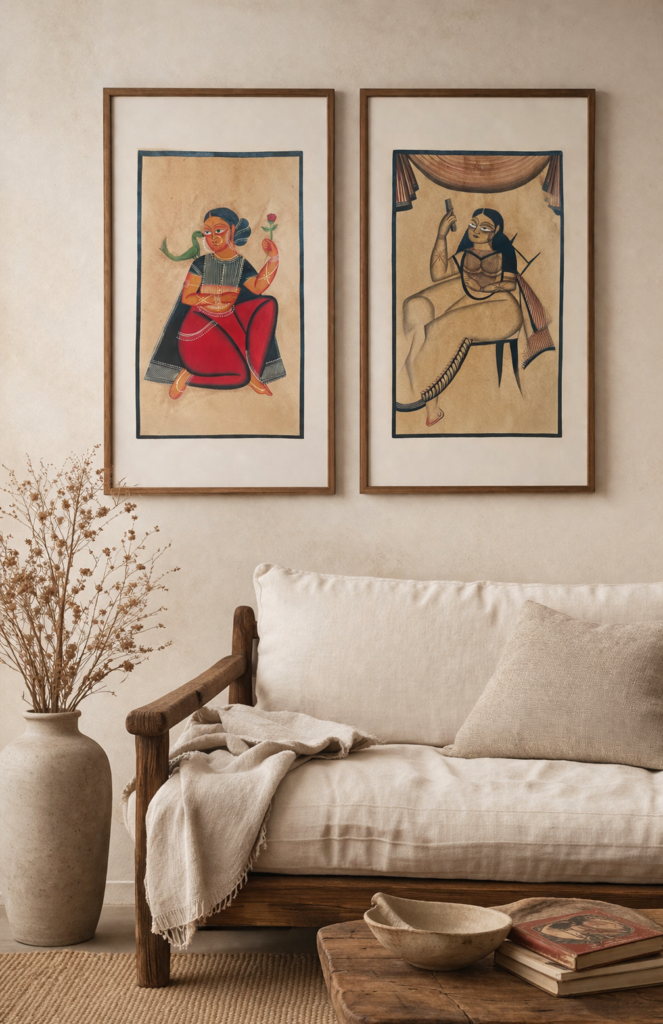
Animals as Storytelling Elements
Animals appear frequently in Pattachitra paintings and often carry symbolic meaning within mythological narratives.
Common animal motifs include:
• Elephants, representing strength and wisdom
• Deer, symbolizing gentleness and grace
• Birds, representing freedom and spiritual connection
In many cases, these animals also appear as companions or vehicles for deities, reinforcing their mythological significance.
Through these symbols, artists bring both narrative and emotional depth to their work.
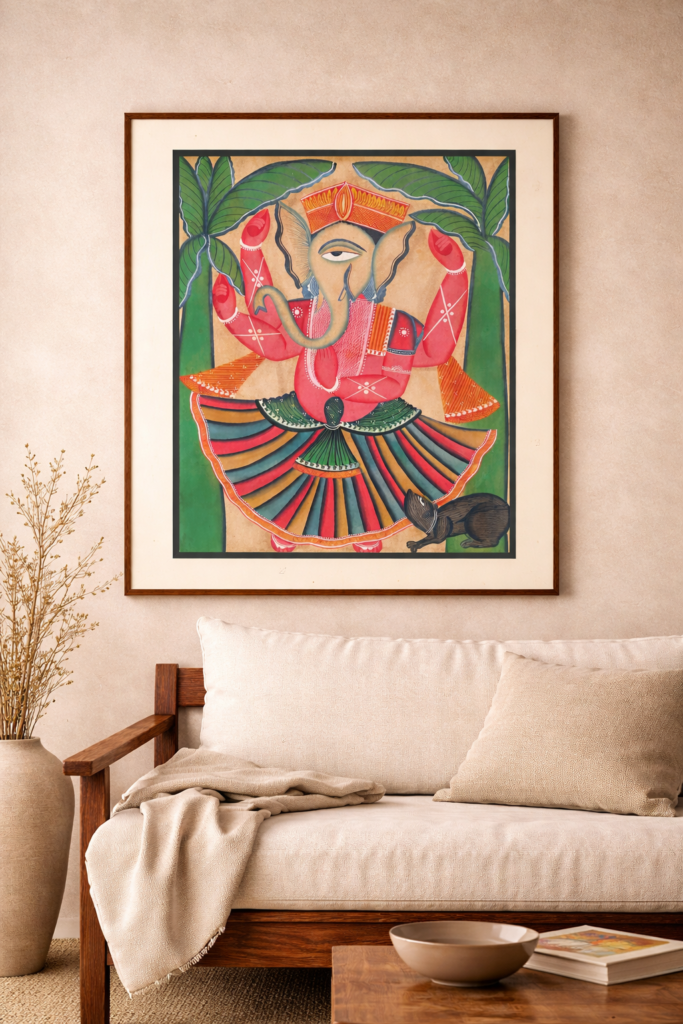
Decorative Borders and Patterns
One of the defining characteristics of Pattachitra art is its intricate border designs. These borders are not simply decorative, they help frame the narrative and guide the viewer’s attention.
Borders may feature repeating patterns of:
• Flowers
• Geometric shapes
• Stylized leaves and vines
These decorative elements enhance the visual rhythm of the painting while maintaining the overall storytelling structure.
They also highlight the craftsmanship and attention to detail that define traditional Indian art symbols.
Why Motifs Matter in Pattachitra Art
Each motif within a Pattachitra painting serves a purpose. Together, they form a visual narrative that reflects mythology, spirituality, and everyday life.
By understanding Bengal folk painting motifs, viewers can connect more deeply with the artwork. What might initially appear as decorative elements reveal themselves as meaningful symbols once their cultural context is understood.
This layered storytelling is one reason Pattachitra continues to captivate collectors and art enthusiasts today.
Bringing Symbolic Art into Contemporary Spaces
Today, Pattachitra artworks are appreciated not only for their cultural significance but also for their aesthetic richness. The symbolism embedded in these motifs allows each piece to carry a story that resonates beyond its visual form.
In modern interiors, such artworks add both character and cultural depth. They transform walls into spaces that reflect heritage, artistry, and meaning.
Preserving a Heritage of Meaning
The artists who create Pattachitra paintings carry forward a long lineage of cultural knowledge. Their work preserves the symbolic language of Indian folk art while adapting it for contemporary audiences.
Supporting handcrafted artworks helps sustain these traditions and ensures that the symbolic stories embedded in these paintings continue to be shared.
Conclusion: A Visual Language of Tradition
Pattachitra paintings are far more than decorative art. They are visual narratives filled with symbols that reflect mythology, nature, and spiritual beliefs.
By understanding the meaning behind these motifs, we gain a deeper appreciation of the artist’s craft and the cultural heritage it represents.
Every flower, bird, and pattern tells part of a larger story. And together, these symbols create a timeless visual language that continues to inspire across generations.

It is a long established fact that a reader will be distracted



Nisanth (Mumbai) purchase
Plaids- Blue- Kantha cushion cover | 14″x26″| Rectangular | Blue colour30 minutes ago



Comments(0)